
Do I Have a Responsibility?
How can I walk away from helping others to write fiction?

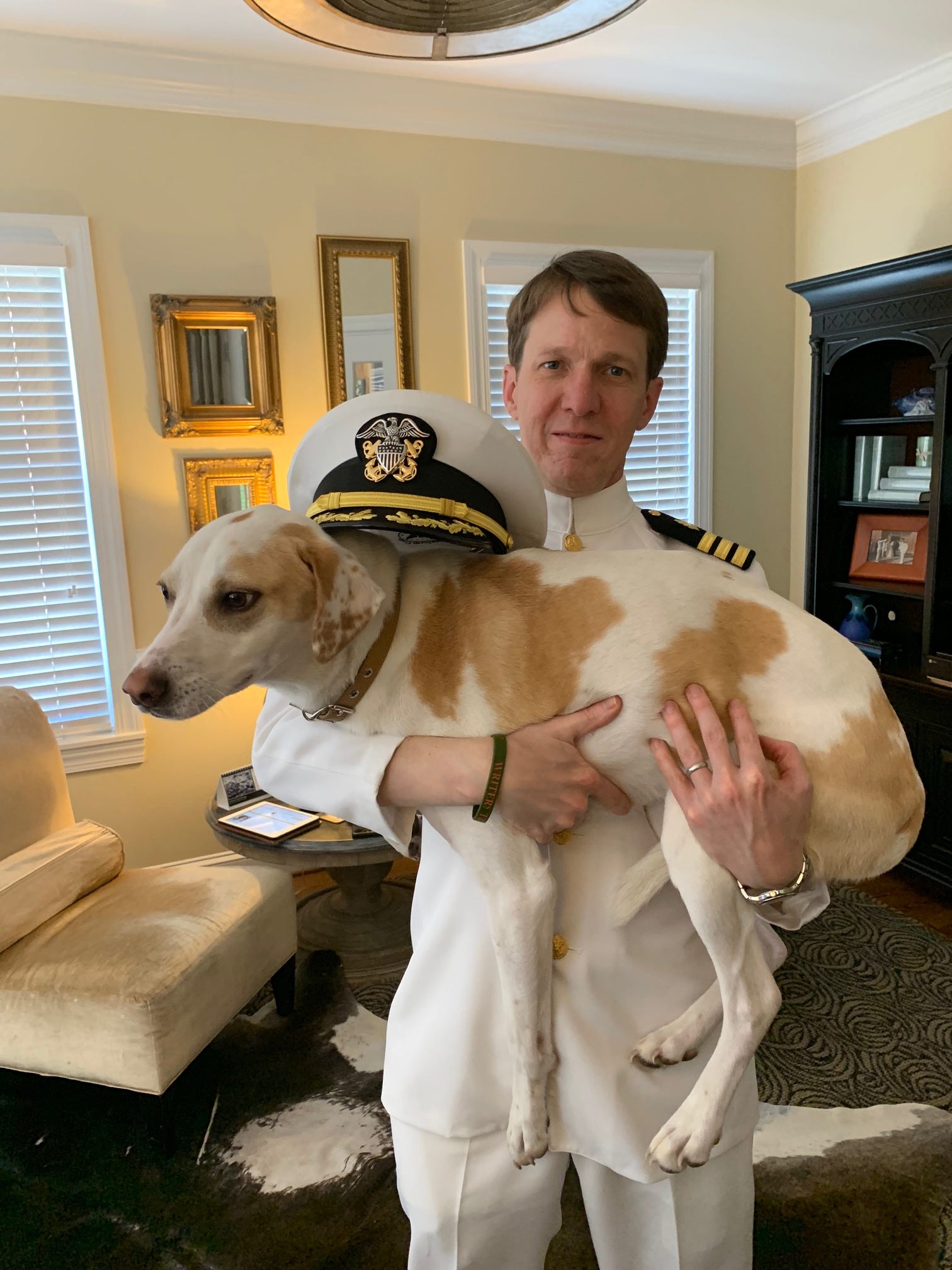
During my last year in the Navy, I sometimes chatted with a psychologist who’d trained me years earlier. He was revered within our world of military psychiatry. At Walter Reed, I was doing mostly administrative work at that point. He sometimes stopped by my office because of that, to talk about staffing for his team or about happenings around the hospital. He enjoyed training and mentoring psychiatrists. I knew he saw himself as still mentoring me, even though I’d become his boss.
A native of New York City, he gave direct answers spiced with cutting humor and remnants of a Brooklyn accent. I always enjoyed talking with him, but it was also a struggle, as things worthwhile often are. He expected good comebacks to his sarcasm and insightful discussions about patients, but underneath the jokes, a tension also existed between us. He always wanted more from me, just like he did from everyone else. In his world, we were all one hundred percent dedicated to our jobs, sometimes working harder than smarter. He never liked it when I pointed out ways for him and his team to get home at a reasonable hour. That’s because he loved being in the trenches of helping service members, even if those working under him didn’t have the stamina and burned out and left.
It must’ve been summer, because I remember my office was chilly during our conversation. The building’s air conditioning froze us in the summer and the heat baked us in the winter.
“I hear you’re retiring,” he said to me right after sitting down.
“You come to measure my office?” I said.
“I don’t want it if I’d have to do the shit you do now. You know that.”
“It has room for a cot. You can make it official and move into the hospital.”
He smirked and shook his head slowly in response. “So you taking a job here? You can work on my team.”
“Hell, no,” I said and glanced at the emails popping up on my screen. Between the few patients I saw then, that was how I spent most of my day: answering “hot, hot, hot” emails from bosses and putting out administrative fires.
“So what are you going to do?” he asked. “Have some cushy private practice?”
Like most people, I’d never told him my actual dreams. Few knew them back then, only a handful of fellow writers far away from my military and medical career. In fact, after college, I’d kept those dreams from myself for a few decades. But then talking to patients who’d survived battles where they thought they’d die at any moment had convinced me to pursue what I love before my time runs out.
Respect from this psychologist didn’t matter as much to me as it once had, when I was focused on being the best psychiatrist I could be. At least I told myself it didn’t matter anymore, but I felt remnants of that need to please I had whenever I spoke with him. I remember thinking at that moment that I felt bad about what I wanted to say to him. I didn’t want to hurt him, as if he couldn’t tolerate hearing my dreams. Maybe I couldn’t tolerate hearing them in his presence.
“I want to write fiction,” I said and watched him. But then I couldn’t stand the silence. “I’ll join my wife in private practice part time, but writing will be—”
“You have a responsibility to psychiatry.” He stared at me.
His answer made me angry. I don’t like guilt. My voice grew louder, defensive: “I’ve done plenty.” I wanted to believe that and leave my career in psychiatry, but even as I said it to him, I knew I felt I hadn’t done enough and couldn’t walk away.
“Don’t just quit.”
“I’m not quitting, I’m starting,” I said. I meant it, but didn’t like how it hurt to say it.
Then he appeared tired and looked away from me. After a few moments of inconsequential talk I can’t remember now, he made an excuse and left.
I stewed for the rest of the day, struggling to embrace the freedom I’d been anticipating for years. Within a year, I’d no longer be around the wounded from our wars. This was 2018. The casualty numbers weren’t as high as a decade earlier, but our war in Afghanistan continued. Whenever I walked through our hospital, I still saw double, even triple, amputees in the hallways, young men slowly making their way on metal legs. Sometimes I glanced and thought I saw soldiers with amputated limbs, only to look again and realize I’d imagined it. Those brief hallucinations didn’t surprise me anymore. Neither did my frequent nightmares or anger and distance I felt around everyone who’d never been involved in the wars since 9/11. But I wanted, needed, to face what I’d feared for years, more than IED blasts or snipers or rockets: the risks of putting my writing out there for others to judge.
That conversation happened about eight years ago now. Maybe July brought it to mind, the month of new training years in hospitals, the first month of my retirement a year after it, in 2019. It’s also come up because I feel something like the responsibility he was trying to remind me of, or force on me.
For the past four years, I’ve been volunteering to teach Ukrainian therapists how to treat combat-related PTSD. It feels rewarding. They are always so grateful. Some have told me I’ve helped them save lives. Someone in charge of a non-profit group read a professional paper I’d written about treating PTSD in 2011 and sought me out. I also have some connection with that part of the world. Not only did I major in Russian language and literature in college, but I also studied abroad for a semester in southern Russia, in Rostov-on-Don, not far from the Ukrainian border. I hung out with Russian and Ukrainian students and had Ukrainian girlfriends. They got along better then.
My work with this non-profit has evolved from a single lecture the first year to a semester-long course consisting of eleven two-hour weekly classes. The non-profit’s plan has always been to train Ukrainians to take over teaching the program’s courses. My course is now the last one taught by an American. They haven’t found anyone who feels qualified and experienced enough to teach it. However, four years into an incredibly brutal war where over a thousand soldiers die each day and Russian missiles and drones spare no Ukrainian civilians, there are likely plenty of therapists with more experience than me in treating combat trauma.
As part of turning over the class to a Ukrainian instructor, I recently thought of writing a manual about treating combat-related PTSD. It would be for them, not necessarily to be published in the U.S., but that’s a possibility.
For years, the idea of writing a treatment manual for American therapists has felt like a responsibility. Ever since I published some papers about a particular approach to combat trauma, many therapists here have asked me to write an in-depth manual, a how-to-guide, about it. My most recent classes with the Ukrainians inspired me to revisit it as more like a gift than a responsibility, something to give them and to serve as a guide to a potential new instructor.
Those classes started in February of this year, during the height of Russia’s winter campaign to shut down the heat in Ukraine’s major cities. The classes occurred in their evenings over Zoom and were open to anyone in Ukraine. Unbelievably, just under one thousand therapists signed up for the semester. Usually, no more than five hundred attended any one session. The non-profit recorded the classes so the others would watch them later.
The Ukrainians’ need and motivation to learn moved me. While a Ukrainian psychiatrist translated my English for them, I looked at the people on screen looking back at me. Many sat in the dark, inside their apartments but in winter jackets, their cell phone screens creating a slight glow on their faces. Some disappeared as their charges died. When I floated the idea of writing a manual that could be translated for them, heart emojis filled the Zoom chat.
Now, I’m struggling to write it. My novel’s draft is finished. I’m waiting for some feedback on my query letter for it that I’ll send to agents. I’m also spending hours searching through the thousands of literary agents out there for ones who might be open to representing me and my work to publishing houses. Once the query letter is ready, I’ll begin contacting them, hopefully in a few weeks. I’ve been waiting for this time ever since I decided to put my fiction out there, well before that conversation in my office with my psychologist mentor.
While I have some time right now, there are many things I could do besides writing a treatment manual for PTSD. Trying to develop a writing career is difficult and time consuming. In many ways, it’s been much harder for me than building a career in psychiatry was. There’re so many talented writers out there and only so many spots for publication. You have to write constantly in order to get attention and to improve your craft. But even with the work and brutal competition, I enjoy writing more than medicine. I don’t miss working in hospitals or trying to climb the academic medicine ladder.
For instance, I could start a second novel right now. I have ideas, and that, frankly, is what I’d prefer to be doing right now. Many writers start the next one during this time period of contacting agents. That’s how they often put out a second one right after their first is published. They have it ready.
Perhaps the point is that I don’t want to continue in psychiatry while writing fiction. I can’t do both well. I want to pursue writing as a career, something I dreamed of in college but was afraid to try.
One problem back then was that I didn’t have anything to say. Now, I know more about the world, including that death is coming for all of us and that my clock is ticking. I feel that every day. My continued struggle with PTSD reminds me of it. And writing this manual is taking some of that time away from what I want to be doing.
A treatment manual is a novel-length work. It takes time. I worked quite a bit on it last week after intermittent effort scattered throughout the spring and early summer. My motivation to finish it is drying up, and I fear its quality will suffer if I decide to rush its completion and move on. That’s when my mentor’s words about responsibility come back to mind.
I feel torn because I can’t look away from their suffering, even if continuing to engage with it makes me suffer. Besides the time commitment, teaching this course to Ukrainians each year triggers my own PTSD. I’m usually no good for the rest of the day after a lecture. It’s their stories that always get me. But I tell myself that my brief pain is worth what they can learn.
I don’t think of it as a responsibility. Maybe it’s the guilt of doing nothing. In my mind, I couldn’t live with myself if I ignored what’s happening. But I also wish I could walk away because my writing needs the time and the mental energy that helping them takes.
Despite my ambivalence about helping others, I found my writing voice because I haven’t looked away from suffering. Engagement with the suffering of others, if anything, has given me something to say. It has given me a much deeper and richer understanding of human experience. In that sense, developing PTSD myself from twenty years in the military and even the experience of wanting to kill myself when I returned from Iraq, as I’ve written about in other posts here, might be seen as gifts.
I know what I’ve done to help others is worthwhile. But if someone offered me multiple lives, I wouldn’t spend one of them like that psychologist who’s devoted all his hours, really all his life, to working in a military hospital. That’s too much for me.
Before accepting another life, I’d make sure that I would live it in a world without wars. But then would there be anything worth saying in a world without struggle?
If you enjoyed this, please share or restack it. Thank you!
You can write a novel about PTSD. I did though I could not sell it to agents or publishing houses because , I believe, they then considered the topic taboo. I have a very mild case that I am able to control and I centered on a particular kind of resolution. In my case and the cases of others, it's extraordinarily important to face the truth of what we did in combat and why we did it.
I'm on Amazon. The Kindle version is only $2.99
Hi Russell. Retired VA psychologist here. I read and used your intersubjective treatment model with PTSD combat veterans for over a decade. As a psychodynamically trained psychologist, I found your model to be exceptionally helpful despite the VA and DOD emphasis on CPT or exposure based treatments. My point: you still are using your psychiatric skills to help others, and the manual will expand that impact. I would add that being on the front lines of human suffering is extremely challenging work that is also very fertile soil from which great literature grows. Best of luck as you follow your dream. You’ve earned it.